Why Deep Sleep Should Be A Priority In Your Life

Sleep is one of the most biologically active processes your body performs. Every night while you rest, your brain is cleaning itself, your muscles are rebuilding, your fat cells are being
metabolized, and your cardiovascular system is resetting for the next day. When your body is
deprived of adequate sleep, the consequences show up almost immediately and compound over years. Here we will break down what actually happens during deep rest, what’s at stake when we don’t get enough of it, and best practices for optimizing your nightly reset.

Explore Content

The Biology of Rest: What's Really Happening While You Sleep

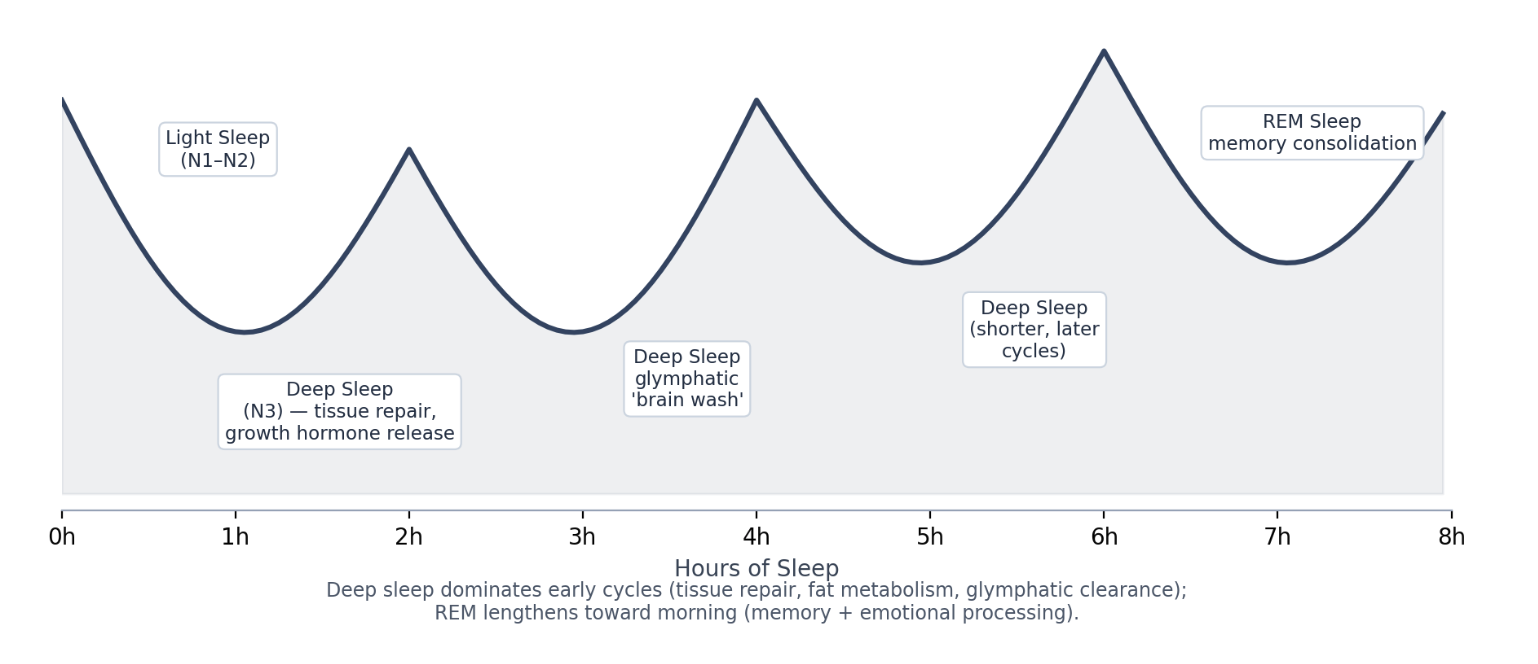
Sleep is a physiologically active state. It cycles through roughly 90-minute loops of light sleep, deep (slow-wave) sleep, and REM sleep, with deep sleep concentrated in the earlier part of the night and REM stretching out toward morning.

Deep sleep is where the heavy physiological lifting happens:

  • The brain's cleansing cycle. During deep sleep, the glymphatic system, a network that clears metabolic waste from the brain, becomes dramatically more active. Research from the University of Rochester found that brain cells shrink during sleep, widening the space between them so cerebrospinal fluid can flush out waste products, including beta-amyloid, a protein linked to Alzheimer's disease.
  • Fat metabolism and appetite regulation. Deep sleep supports the hormonal balance between leptin and ghrelin, the hormones that signal fullness and hunger. When deep sleep is disrupted, this balance tilts toward increased appetite and reduced fat oxidation, which is part of why chronic short sleep is so consistently linked to weight gain.
  • Muscle recovery and tissue repair. Roughly 70% of daily growth hormone secretion occurs during deep sleep. This hormone drives protein synthesis and tissue repair, which is why athletes and anyone recovering from physical exertion depend on slow-wave sleep to rebuild muscle fiber.
  • Memory consolidation. While deep sleep handles physical repair, REM sleep (which is concentrated later in the night) is where the brain consolidates memories and processes emotional experiences from the day.

What happens during a night of sleep

The performance payoff is immediate. Sleep researcher Matthew Walker's work has repeatedly shown that a single night of shortened sleep measurably impairs next-day reaction time, decision-making, and emotional regulation. The longevity payoff is slower but larger: consistent deep sleep is associated with lower rates of cardiovascular disease, neurodegeneration, and all-cause mortality over decades.

When Sleep Falls Short: The Cost of Sleep Debt

Chronic sleep deprivation, commonly defined as 6 hours or less per night, isn't a minor inconvenience. It's a measurable physiological stressor with cascading effects:

  • Elevated cortisol and adrenal strain. Sleep restriction raises evening and morning cortisol levels, keeping the body in a low-grade stress state that many describe as "adrenal fatigue." Sustained cortisol elevation interferes with the body's ability to downshift into recovery mode.
  • Weakened immune function. Studies on sleep and immunity have found that people sleeping 6 hours or less are significantly more likely to catch a cold after viral exposure than those sleeping 7+ hours, likely due to reduced T-cell function and disrupted cytokine regulation.
  • Higher stroke and cardiovascular risk. Large epidemiological studies have linked habitual short sleep to elevated blood pressure, arterial stiffening, and increased risk of stroke and coronary heart disease.
  • Weight gain and fatty liver disease risk. Insufficient deep sleep disrupts insulin sensitivity and lipid metabolism. Research has connected chronic sleep restriction to increased visceral fat storage and a higher incidence of non-alcoholic fatty liver disease, driven partly by impaired fat breakdown in the liver overnight.


Put simply, the body treats insufficient sleep as an emergency, and it responds the way it responds to any chronic stressor — by staying in a state of alert that, over months and years, wears down the cardiovascular, metabolic, and immune systems.

Circadian Rhythms: Your Body’s Internal Clock

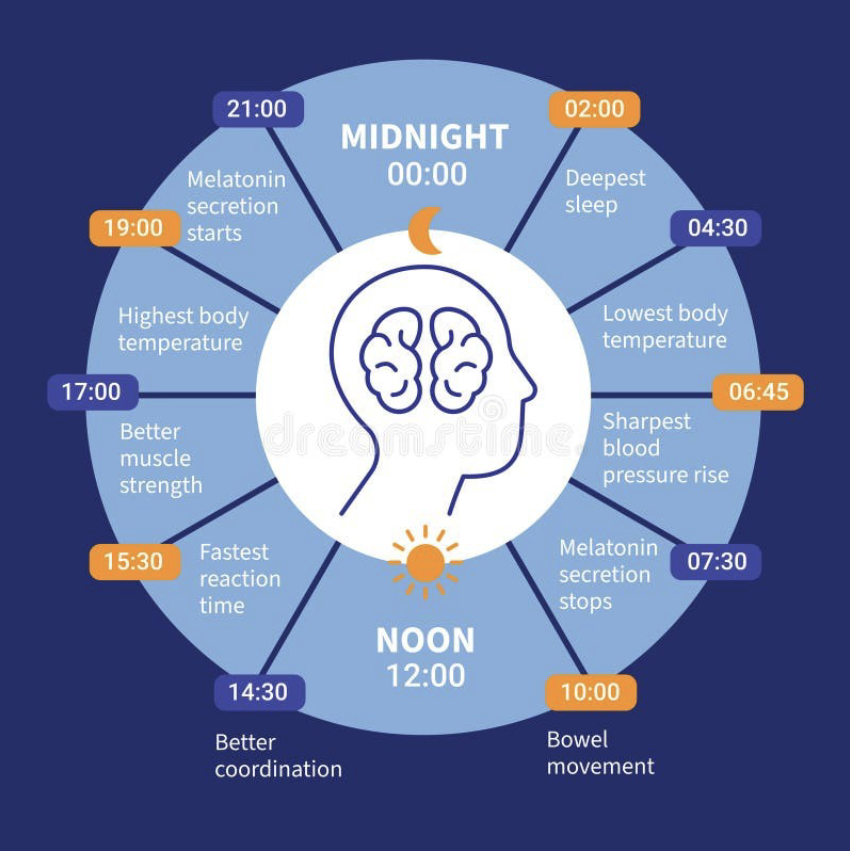
Every cell in your body runs on an approximately 24-hour cycle governed by the suprachiasmatic nucleus, a cluster of neurons in the hypothalamus that responds primarily to light exposure. This circadian rhythm regulates when melatonin is released, when cortisol peaks to wake you up, and when your body temperature naturally dips to promote sleep.

The problem with irregular sleep schedules isn't just fewer hours; it's circadian misalignment. Going to bed and waking up at inconsistent times forces the body to constantly re-negotiate its internal clock, which degrades sleep quality even when total sleep duration looks adequate on paper. Research on shift workers and "social jet lag" (the mismatch between weekday and weekend sleep schedules) has linked circadian disruption to increased risk of metabolic
syndrome, mood disorders, and impaired cognitive performance.

The practical takeaway is that a consistent sleep and wake time, even on weekends, does more
for sleep quality than almost any other single habit, because it keeps melatonin release, cortisol
rhythm, and core body temperature cycling in sync.

Temperature: The Environmental Lever We Often Forget

Your body needs to drop its core temperature by 1–3°F to initiate and sustain sleep. A bedroom that's too warm fights this process directly, which is why temperature is one of the most consistently cited variables in sleep research.

Sleep researchers and organizations, including the National Sleep Foundation, generally recommend a bedroom temperature between 60°F and 68°F (15.5–20°C) for most adults, as this range best supports the body's natural overnight temperature drop and reduces nighttime awakenings.

Ways to regulate body temperature for better rest:

  • Set the thermostat in the 60–68°F range (older adults may sleep better at a slightly warmer temp, closer to 68–72°F, due to age-related changes in thermoregulation).
  • Use breathable, moisture-wicking sheets and sleepwear (natural cotton, linen, or technical fabrics) instead of heat-trapping synthetics.
  • Take a warm shower or bath 1–2 hours before bed. The subsequent rapid cooling of skin temperature helps trigger sleep onset.
  • Keep hands and feet uncovered or lightly covered, since they're key sites for heat dissipation.
  • Consider a cooling mattress topper or wrap with variable cooling zones for partners with different temperature preferences.

Sleep Hygiene Fundamentals

Sleep hygiene is a daily practice that should focus on removing the friction between your body and its natural sleep process. A few evidence-backed basics:

  • Keep a consistent sleep/wake schedule, including weekends.
  • Get morning sunlight exposure within an hour of waking to anchor your circadian rhythm.
  • Limit caffeine after early afternoon — caffeine has a half-life of roughly 5–6 hours and can fragment deep sleep even if you fall asleep fine.
  • Dim lights and reduce blue light exposure 1–2 hours before bed to support natural melatonin release.
  • Reserve the bed for sleep (not work or scrolling) to strengthen the mental association between bed and rest.
  • Avoid heavy meals and alcohol close to bedtime — alcohol may induce drowsiness but significantly reduces REM and deep sleep quality.
  • Keep the room cool, dark, and quiet, addressing temperature, light, and noise together as a system.

Regulating the Nervous System: Breathwork and Meditation as Sleep Tools

Deep rest requires the parasympathetic nervous system, the "rest and digest" branch, to be dominant. For many people, the barrier to good sleep isn't the environment; it's an overactive sympathetic nervous system that stays switched on from a day of stress, stimulation, and unresolved tension.

This is where somatic breathwork and meditation earn their place in a rest practice, not as a wellness add-on but as a direct physiological intervention:

  • Slow, extended exhale breathing (such as a 4-count inhale, 6–8 count exhale) activates the vagus nerve and shifts the autonomic nervous system out of fight-or-flight, lowering heart rate and cortisol before bed.
  • Body scan meditation helps release residual muscular tension that keeps the nervous system in a state of low-grade vigilance.
  • Regular meditation practice has been associated in sleep research with reduced sleep-onset latency and improved sleep quality, likely through its effects on reducing pre-sleep cognitive arousal and rumination.

The goal of these practices isn't relaxation as an end in itself, it's downregulating the nervous system enough that the body can actually enter and sustain the deep sleep stages where the real physiological repair happens.

Discover more

Sleep While Traveling

Travel is one of the fastest ways to throw sleep….

The Sleep Environment:

Most sleep advice focuses on behavior – what time to….

The Science of Rest

Sleep is one of the most biologically active processes your….