Nightly Rituals and Daily Habits For Better Sleep

Our sleep quality is shaped by the decisions we make throughout our entire day – when we have our last coffee, whether we gave our nervous system a chance to downshift, how much heat or vibration or sound we exposed our bodies to, and what we did in the final hour before bed. This post covers the daily habits and nightly rituals with the strongest research support for improving deep, restorative sleep.

Explore Content

Daily Habits That Quietly Shape Your Sleep

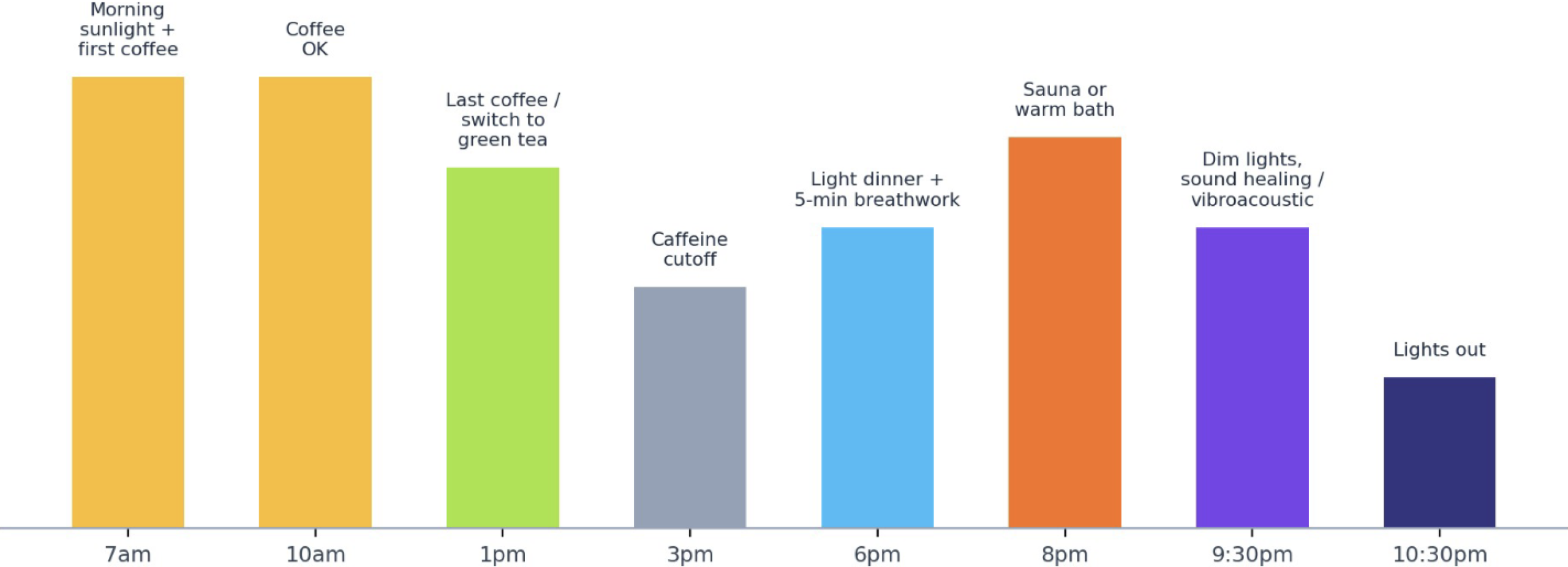
Caffeine is the most common and most underestimated disruptor of sleep architecture. Caffeine has a half-life of roughly 5–6 hours, meaning a 3 pm coffee can still have a meaningful amount of stimulant activity in your system at 9 pm. Beyond keeping you awake, caffeine also triggers cortisol release, and elevated afternoon or evening cortisol works directly against the natural evening cortisol decline your circadian rhythm depends on to initiate sleep. This is why sleep researchers generally recommend an early afternoon cutoff for caffeine and why many people find that switching from coffee to green tea in the early afternoon helps: green tea contains far less caffeine along with L-theanine, an amino acid that promotes calm alertness without the same cortisol-spiking effect.

Sleep supplements have also gained research attention for supporting deep sleep through natural pathways rather than sedation:

  • Magnesium glycinate supports GABA activity, the brain's primary calming neurotransmitter, and has been associated with improved sleep quality in people with mild deficiency
  • L-theanine promotes alpha brainwave activity associated with relaxed wakefulness, easing the transition into sleep
  • Glycine has been shown in small studies to lower core body temperature slightly and improve subjective sleep quality
  • Valerian root and chamomile have a longer history of traditional use and some modest clinical support for reducing sleep onset time

Meditation and Breathwork Throughout the Day

Most people only think about stress management right before bed, but the nervous system doesn't wait until 10 pm to accumulate tension; it builds all day. Distributing brief meditation or breathwork sessions across the day keeps cortisol from stacking up into an evening spike that's harder to unwind before sleep.

A simple, evidence-supported rhythm:

  • Morning (5–10 minutes): a short meditation or box-breathing session sets a lower physiological stress baseline for the rest of the day
  • Midday (2–5 minutes): a brief breathing reset such as slow, extended-exhale breathing during a natural stress point (post-lunch slump, a demanding meeting) prevents cortisol from compounding
  • Evening (10–15 minutes): a longer wind-down practice, such as body-scan meditation or 4-7-8 breathing, directly activates the vagus nerve and shifts the body from sympathetic ("fight or flight") to parasympathetic ("rest and digest") dominance ahead of sleep

A day built around better sleep


Heat Therapy: Infrared Saunas and Sauna Blankets

Heat exposure earlier in the evening works with your body's natural sleep mechanics rather than against them. Core body temperature needs to drop to initiate sleep, and raising it deliberately through infrared sauna sessions or sauna blankets triggers a stronger rebound cooling effect afterward, similar to the mechanism behind a warm bath before bed, but more
pronounced. Research on passive heat exposure has linked evening sauna use to improved sleep onset and increased slow-wave sleep, likely through this heating-then-cooling cycle combined with the parasympathetic activation that comes from heat-induced relaxation. For best results, sauna sessions are generally recommended 1–2 hours before bed, giving the body enough time to complete its cooling rebound by lights-out.

Vibroacoustic Wellness Mats

Vibroacoustic therapy uses embedded speakers or transducers in a mat to deliver low- frequency sound directly through physical vibration rather than through the ears alone. Lying on the mat exposes the body to gentle vibrations, typically in the 30–120 Hz range, synchronized with calming music or tones. Research on vibroacoustic therapy has shown reductions in muscle tension, perceived pain, and anxiety, along with subjective improvements in relaxation, effects that make it a useful pre-sleep tool for physically discharging tension that would otherwise keep the nervous system activated at bedtime.

Sound Healing: How It Actually Works

Sound-based relaxation tools have moved from niche wellness practice into legitimate areas of sleep research, largely because of their measurable effects on brainwave activity, cortisol, and the autonomic nervous system.

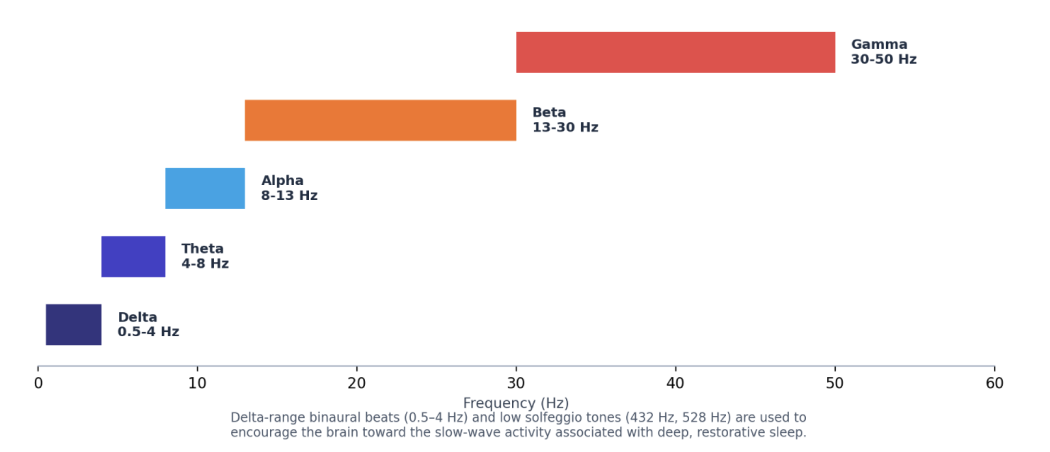
Brainwave entrainment is the underlying mechanism: the brain has a natural tendency to synchronize its electrical activity toward the rhythm of a repeated external stimulus, whether that's a flickering light, a rhythmic drum, or an audio tone. Different frequency bands correspond to different mental states and the delta band, roughly 0.5–4 Hz, is associated specifically with deep, slow-wave sleep.


Brainwave bands: Delta is the deep sleep target

Not all sound is equally useful for sleep, though. For pure background masking:

  • White noise covers all frequencies at equal intensity, which can sound harsh and has been associated in some studies with less consistent benefit for sustained sleep
  • Pink noise reduces intensity at higher frequencies, producing a softer, more natural sound (like steady rainfall) that some research links to increased slow-wave activity
  • Brown noise reduces high frequencies even further, producing a deeper, lower rumble that many find more soothing for uninterrupted masking of household or street noise

For deliberate brainwave targeting rather than pure masking, two specific tools are frequently studied:

  • Binaural beats in the delta range (0.5–4 Hz) work by playing two slightly different tones in each ear; the brain perceives the mathematical difference as a third "phantom" beat, and several small studies, including EEG-monitored trials, have found that delta-frequency binaural beats can measurably increase time spent in slow-wave (N3) sleep
  • Solfeggio frequencies, particularly 432 Hz and 528 Hz, are used in sound healing practices for their reported calming qualities; while rigorous clinical research on these specific frequencies is more limited than for binaural beats, proponents and some preliminary studies suggest they may support relaxation and vagus nerve activation, contributing to lower heart rate and a parasympathetic shift that supports natural melatonin release

It's worth noting that evidence for binaural beats and data entrainment, while promising, largely comes from small pilot studies. Although the effects are real for many users, the research base is still developing.

Personal Comfort Tools Worth Considering

Sometimes the simplest interventions have the most immediate impact:

  • Earplugs remain one of the most effective tools for eliminating sudden noise disruptions, particularly for light sleepers or anyone sharing a bed with a partner who snores
  • Silk sleep masks block light while remaining breathable and gentle on skin, reducing the friction and irritation that stiffer masks can cause overnight
  • Blackout sleep masks offer more complete light exclusion for shift workers, frequent travelers, or anyone in a room that can't be fully darkened
  • Smart sleep masks combine blackout material with built-in audio, gentle wake-up light simulation, or biometric tracking to time wake-up with lighter sleep stages
  • Smart headbands track brainwave activity, heart rate, or movement while also delivering audio like binaural beats or guided meditation directly at the temple, without requiring earbuds all night

Habit Maxxing

All of these habits function as a stack. Daily choices about caffeine, stress regulation, and heat exposure set the physiological stage; nightly rituals involving sound, vibration, and comfort tools finish the job of guiding the nervous system into deep, restorative sleep. Layered together consistently, they give your body the clearest possible signal that it's time to rest. For recommended solutions, please visit our Rest Standards page.

Discover more

Sleep While Traveling

Travel is one of the fastest ways to throw sleep….

The Sleep Environment:

Most sleep advice focuses on behavior – what time to….

The Science of Rest

Sleep is one of the most biologically active processes your….