Circadian Rhythms: Your Body’s Internal Clock
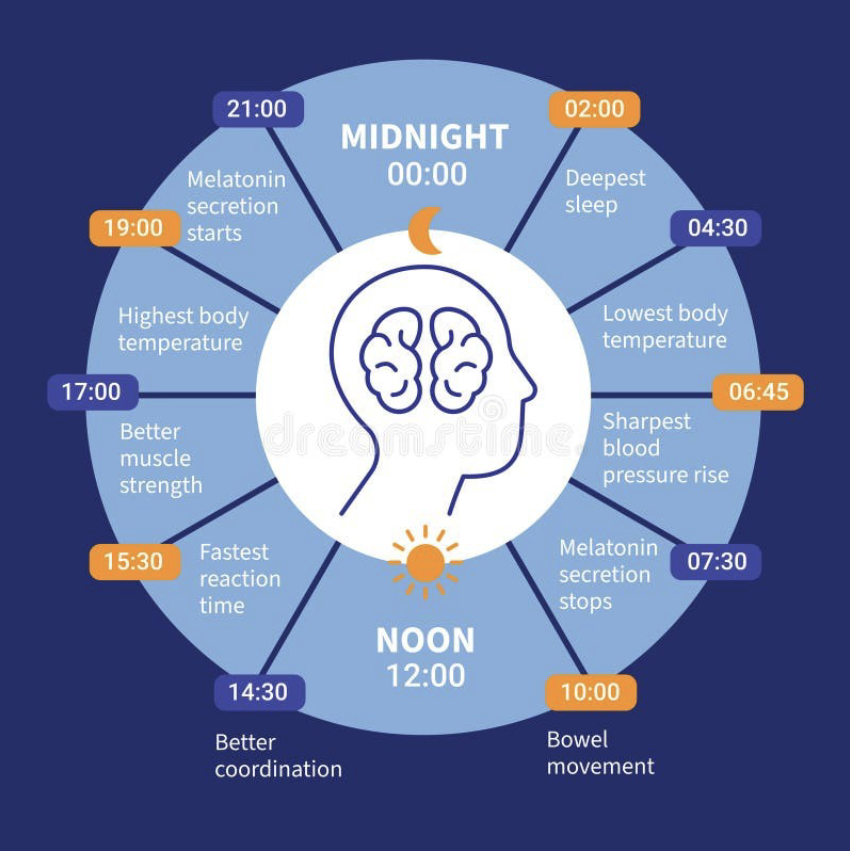
Every cell in your body runs on an approximately 24-hour cycle governed by the suprachiasmatic nucleus, a cluster of neurons in the hypothalamus that responds primarily to light exposure. This circadian rhythm regulates when melatonin is released, when cortisol peaks to wake you up, and when your body temperature naturally dips to promote sleep.
The problem with irregular sleep schedules is circadian misalignment. Going to bed and waking up at inconsistent times forces the body to constantly re-negotiate its internal clock, which degrades sleep quality even when total duration looks adequate on a sleep tracker. Research on shift workers and "social jet lag" (the mismatch between weekday and weekend sleep schedules) has linked circadian disruption to increased risk of metabolic
syndrome, mood disorders, and impaired cognitive performance.
The practical takeaway is that a consistent sleep and wake time, even on weekends, does more
for sleep quality than almost any other single habit, because it keeps melatonin release, cortisol
rhythm, and core body temperature cycling in sync.