Light Exposure: The Most Powerful Circadian Signal
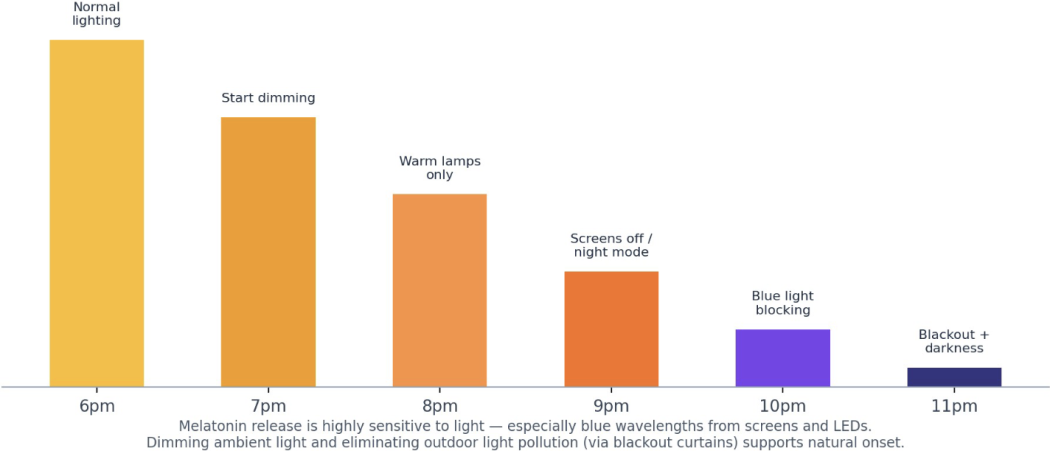
Of every environmental input, light has the single strongest effect on the body's sleep-wake system. Light, particularly blue wavelengths in the 460–480nm range emitted heavily by phone screens, laptops, and standard LED bulbs, suppresses melatonin production by signaling to the suprachiasmatic nucleus that it's still daytime. Exposure to bright or blue-heavy light in the hour or two before bed measurably delays sleep onset and shifts the circadian clock later.
Beyond your own lighting choices, outdoor light pollution such as streetlights, passing car headlights, early dawn light in summer, can cause repeated brief awakenings throughout the night, even if you don't remember them in the morning. Blackout curtains combined with French return rods eliminate this variable entirely, which is especially valuable for anyone in an urban environment, on a rotating shift schedule, or living somewhere with long summer daylight hours.
The fix isn't total darkness starting at sundown; it's a gradual dimming that mirrors what the
body evolved to expect from a setting sun.
Wind down your lighting after sundown